Commiphora wightii (guggul) – Ayurvedic gold from the desert
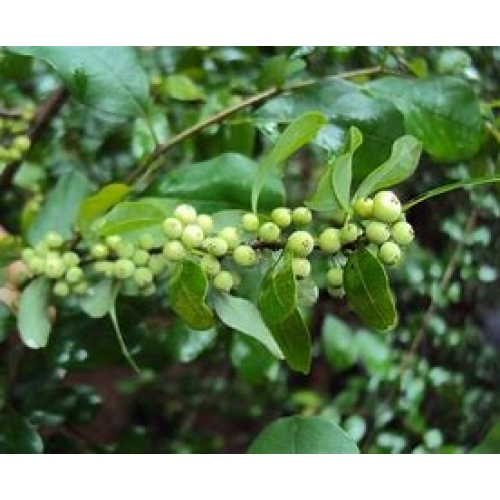
This small, thorny tree is native to the arid regions of India, Pakistan and parts of Africa. It has been central to Ayurvedic medicine for thousands of years thanks to its potent resin, known as guggul or guggulipid.
Botanical and ecological characteristics
Guggul grows as a shrub or small tree, reaching heights of up to 4 metres. It is well adapted to extreme conditions such as high temperatures, low rainfall, and poor, rocky soils. The resin is extracted by cutting into the bark.
Traditional uses
In Ayurveda, guggul is considered a yogavahi, or an herb that transports other substances deep into the body. It is used to balance the three doshas (Vata, Pitta and Kapha), particularly affecting Vata.
Uses of guggul:
- Cholesterol regulation
Detoxification
Weight control: stimulates fat burning
- Skin health: promotes youthful, healthy skin
- Increases resistance.
- Digestion: stimulates Agni, the digestive fire.
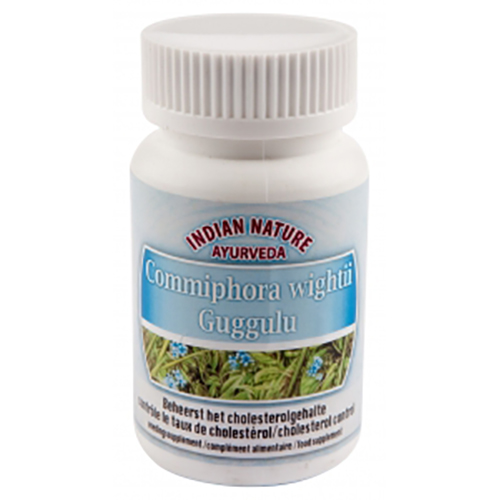
Packaging: 100 vegetable capsules
Notification Number: pl/441/33
Guggulu is a complex herb that contains four tastes: bitter, pungent, astringent and sweet. It is espescially helpful for stabilizing Vata and Kapha imbalances without aggravating Pita.
Guggulu is a herb that helps to regulate the lipid metabolism, showing excellent results for weight control and body fat reduction.
extract of commiphora wightii-guggulu 400 mg
1-2 capsules, twice a day, outside meal times.
Get professional advice before taking our plant-based supplements.
The plant extracts 7:1 are produced according to GMP standards. All ingredients are approved by the European legislation and an analysis is carried out on each lot. Our food supplements prevent or correct an energetic disorder. This information applies only to energetic disorders.
We are not responsible for wrong or inappropriate use.
A herbal food supplement is not a substitute for a varied diet. It is not advisable to exceed the recommended daily dose. Always store the product away from children.